Group Tour of Varanasi for Temple Ghat & Aarti Experience , Varanasi’s spiritual essence manifests most powerfully through its temples, ghats, and the mesmerizing Ganga Aarti ceremony. For travelers seeking authentic immersion into India’s sacred heart, a focused group tour concentrating on these three elements offers profound experiences while maintaining practical convenience. This specialized approach allows deeper engagement with Varanasi’s spiritual landscape rather than spreading attention across too many diverse attractions.
Why Focus on Temples, Ghats, and Aarti
Group Tour of Varanasi for Temple Ghat & Aarti Experience , These three elements form the trinity of Varanasi’s spiritual identity. Ancient temples represent centuries of devotion and architectural heritage, each with unique histories and religious significance. The ghats—those iconic stone steps descending into the Ganges—serve as interfaces between the physical and spiritual worlds where millions perform daily rituals. The aarti ceremonies transform these spaces into theaters of devotion where fire, sound, and faith converge in spectacular displays.
Group tours focusing specifically on these experiences provide several advantages. Specialized guides possess deep knowledge about religious practices, temple protocols, and aarti traditions that general guides might lack. Focused itineraries allow sufficient time at each location rather than rushed visits between numerous unrelated sites. Group dynamics create shared spiritual experiences that individual travel cannot replicate—witnessing aarti alongside fellow travelers amplifies the emotional impact.
Essential Temples on Spiritual Group Tours
Kashi Vishwanath Temple The golden-spired Kashi Vishwanath Temple stands as Varanasi’s spiritual epicenter, housing one of twelve sacred Jyotirlingas. For practicing Hindus, darshan here represents a lifetime pilgrimage goal. The temple’s inner sanctum contains the main Shivalinga, though non-Hindus typically view from outer areas. Group tours navigate the complex security protocols—no electronic devices, bags, or cameras allowed—by arranging secure storage beforehand.
The surrounding lanes buzz with religious commerce—flower sellers, priests offering pujas, vendors selling religious items. Guides explain the temple’s history, including its destruction and reconstruction multiple times, and its relationship with the adjacent Gyanvapi Mosque, a testament to Varanasi’s layered history. Early morning or late evening visits avoid peak crowds, allowing more contemplative experiences.
Sankat Mochan Hanuman Temple Located in the southern part of the city, this temple dedicated to Lord Hanuman draws devotees seeking protection from troubles (sankat means trouble; mochan means relief). Founded by saint-poet Tulsidas, the temple maintains a more accessible atmosphere than Kashi Vishwanath, making it ideal for group visits.
Tuesday and Saturday see particularly large crowds as these days hold special significance for Hanuman worship. The temple complex’s open layout accommodates groups comfortably, and priests often welcome arranging special pujas for visiting groups. Classical music performances occasionally occur in the evenings, adding cultural dimension to spiritual visits.
Durga Temple Known locally as the Monkey Temple due to resident simian populations, this 18th-century temple dedicated to Goddess Durga features distinctive red ochre architecture. Built in North Indian Nagara style, the temple complex includes a rectangular water tank called Durga Kund, where devotees perform ablutions before worship.
The temple remains closed to non-Hindus inside the main sanctum, but the exterior architecture and surrounding atmosphere provide rich experiences. Groups can observe worship practices from courtyard areas while guides explain the significance of Durga worship in Hindu tradition and the temple’s connection to local legends.
Tulsi Manas Temple This relatively modern temple (built 1964) celebrates saint-poet Tulsidas, author of the Ram Charit Manas—the Hindi version of the Ramayana. The temple’s walls feature beautiful marble carvings inscribed with verses from this sacred text, creating a unique architectural-literary experience.
Unlike older temples with crowding and complex protocols, Tulsi Manas Temple welcomes all visitors regardless of religion. The serene atmosphere suits contemplative groups, and evening aarti here offers a more intimate alternative to the grand Dashashwamedh spectacle. The temple museum displays various Ramayana editions and artifacts related to Tulsidas’s life.
Exploring Varanasi’s Sacred Ghats
Varanasi’s approximately 84 ghats each carry distinct characters and purposes, from cremation ghats where the cycle of life completes to bathing ghats where devotees seek spiritual purification.
Dashashwamedh Ghat The most famous and perpetually vibrant ghat, Dashashwamedh holds legendary status as the site where Lord Brahma performed ten horse sacrifices to welcome Shiva. Today it serves as Varanasi’s ceremonial heart, hosting the elaborate evening Ganga Aarti that draws thousands daily.
Morning visits reveal a different character—devotees performing personal pujas, holy men in meditation, people bathing in the sacred waters. Group tours typically visit during calmer morning hours for boat rides, returning for the evening spectacle. The ghat’s broad steps accommodate large crowds, though groups benefit from coordinator arrangements securing favorable viewing positions.
Assi Ghat At the confluence of the Ganges and Assi rivers, this southern ghat attracts younger crowds and maintains a more relaxed atmosphere. Morning sees yoga practitioners and classical music performances, while evenings feature a smaller, more intimate aarti ceremony popular with those seeking alternatives to Dashashwamedh’s crowds.
The surrounding area offers numerous cafes and restaurants, making Assi Ghat an excellent base for group breaks. The ghat’s accessibility—relatively gentle slopes compared to steeper ghats—suits groups with varying fitness levels. Local legend holds that Goddess Durga threw her sword here after slaying the demon Shumbha-Nishumbha, giving the ghat its name (Assi means sword).
Manikarnika Ghat The primary cremation ghat operates continuously, with pyres burning 24 hours daily. Hindus believe dying in Varanasi and cremation at Manikarnika grants moksha—liberation from the cycle of rebirth. Witnessing this profound ritual offers deep insights into Hindu beliefs about death and the soul’s journey.
Groups must approach with utmost respect and cultural sensitivity. Photography is strictly prohibited—violating this causes serious offense. Guides explain the rituals’ significance while maintaining appropriate distance from grieving families. Many find this experience moving and perspective-shifting, though sensitive individuals may prefer avoiding this ghat.
Panchganga Ghat Named for the mythological confluence of five rivers (though only the Ganges is physically present), Panchganga Ghat features impressive architecture including a mosque built by Mughal emperor Aurangzeb. The ghat exemplifies Varanasi’s syncretic character where Hindu and Islamic heritage coexist.
Group Tour of Varanasi for Temple Ghat & Aarti Experience ,Groups find this ghat less crowded than Dashashwamedh, offering opportunities for quieter contemplation. The early morning golden hour provides exceptional photography opportunities with its distinctive buildings creating dramatic compositions against sunrise light.
The Ganga Aarti Experience
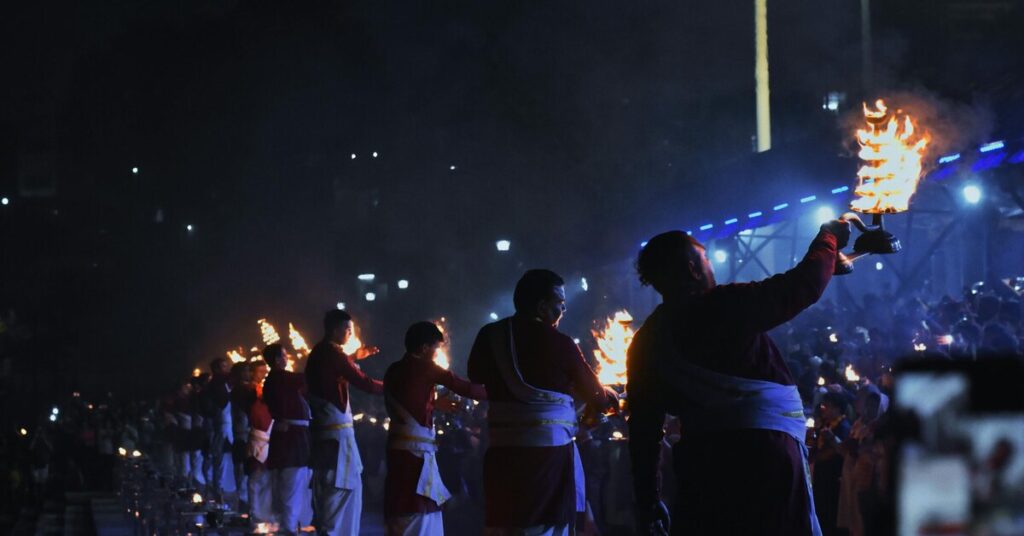
Group Tour of Varanasi for Temple Ghat & Aarti Experience , The evening Ganga Aarti ceremony represents Varanasi’s most iconic spectacle—a synchronized worship ritual combining fire, music, and devotion into unforgettable experiences.
Dashashwamedh Ghat Aarti Beginning around 6:45 PM (timing varies seasonally), this elaborate ceremony involves seven priests performing choreographed movements with large brass lamps, accompanied by bells, conch shells, and devotional music. The priests move through prescribed sequences, offering prayers to the Ganges, representing worship of the divine mother.
Group Tour of Varanasi for Temple Ghat & Aarti Experience , For groups, securing good viewing positions requires arriving 45-60 minutes early. Tour coordinators typically arrange reserved areas on elevated platforms or private boat positions offering unobstructed views. The ceremony lasts approximately 45 minutes, building to crescendos where the entire assemblage becomes unified in devotional energy.
The experience transcends religious boundaries—even non-Hindu visitors often report profound emotional responses to the ceremony’s power and beauty. The visual spectacle of fire against gathering darkness, reflected in the river’s surface, combined with resonant music and palpable devotion creates multisensory immersion.
Alternative Aarti Experiences While Dashashwamedh attracts largest crowds, other ghats offer meaningful aarti experiences with different characters. Assi Ghat’s evening aarti maintains traditional elements in a more intimate setting. Smaller ghats occasionally host private aartis arranged for special groups, providing exclusive experiences with personal priest interactions and opportunities to participate directly.
Some tours include morning aarti experiences—simpler ceremonies as priests welcome the sun and new day. These dawn rituals, performed by individual devotees rather than organized ceremonies, offer insights into personal devotional practices rather than public spectacles.
Typical Group Tour Structure
Well-designed temple-ghat-aarti tours typically span two full days, though three-day versions allow deeper exploration and more relaxed pacing.
Day One: Morning Boat Ride and Temple Circuit Tours begin at sunrise with boat rides along the ghats, offering unique river perspectives on morning rituals. The early light creates magical atmospheres, and the cooler temperatures make extended outdoor time comfortable. After breakfast and rest, afternoon explores major temples—Kashi Vishwanath, Sankat Mochan, and Durga Temple—with guides explaining religious significance, architectural details, and worship practices.
Day One Evening: Ganga Aarti at Dashashwamedh Late afternoon includes preparation for evening aarti—dinner before the ceremony and strategic positioning as crowds gather. The aarti experience culminates the day, followed by return to accommodations, typically allowing time for processing the powerful experience through group discussions or personal reflection.
Day Two: Lesser-Known Ghats and Temple Exploration Morning explores quieter ghats—Panchganga, Kedar Ghat, Harishchandra—offering different perspectives on river life. Mid-morning visits Tulsi Manas Temple and potentially Banaras Hindu University’s Vishwanath Temple. Afternoon might include silk weaving demonstrations or free time for shopping and rest before optional evening activities—attending classical music performances or experiencing aarti at alternative locations like Assi Ghat.
Practical Considerations for Group Temple-Ghat Tours
Dress Code and Cultural Sensitivity Conservative dress is essential—covered shoulders and knees for all participants. Many temples require removing shoes; carrying socks helps navigate potentially uncomfortable stone floors. Women should avoid tight or revealing clothing; men should avoid shorts. Respectful behavior includes not pointing feet toward deities, seeking permission before photographing (many temples prohibit cameras), and maintaining quiet, reverent demeanors.
Physical Requirements Ghat exploration involves climbing steps—sometimes steep, often uneven. While not requiring athletic fitness, basic mobility and balance are necessary. Groups accommodate varying fitness levels through pacing and rest stops, but participants should honestly assess capabilities. Temple visits involve standing for extended periods during explanations and ceremonies.
Timing and Crowds Peak season (November-February) and major festivals bring intense crowding, particularly around Kashi Vishwanath Temple and Dashashwamedh Ghat. Patient acceptance of crowds becomes necessary—rushing or frustration diminishes experiences. Early morning temple visits before 8 AM or late morning (10-11 AM) after initial rush often find better conditions.
Group Size Management Ideal group sizes for focused temple-ghat tours range from 8-15 participants. Smaller groups navigate crowded temples more easily and receive more personalized guide attention. Larger groups may need to split during temple visits when space constrains, reuniting at ghats where open areas accommodate bigger assemblies comfortably.
Conclusion
Varanasi’s temples, ghats, and aarti ceremonies offer portals into India’s living spiritual traditions. Group tours focusing specifically on these experiences create space for genuine engagement rather than superficial sightseeing. The shared journey through sacred spaces, collective witness to ancient rituals, and group processing of profound experiences forge both personal transformation and social bonds. Whether approaching as religious pilgrims or cultural explorers, participants discover that Varanasi’s spiritual power transcends individual belief systems, touching something universal in the human experience of seeking meaning, connection, and transcendence.
Frequently Asked Questions
1. Are temple-ghat-aarti tours suitable for non-Hindus, and will we be welcome at religious sites?
Absolutely. While these tours explore Hindu religious spaces, they welcome people of all faiths and backgrounds. Most temples allow non-Hindu visitors in outer areas and courtyards, though some restrict entry to inner sanctums. Guides clearly explain access levels beforehand. The Ganga Aarti is a public ceremony welcoming all observers—many participants in the nightly crowds are international visitors from diverse religious backgrounds. The key is approaching with respect and genuine interest rather than treating sacred practices as mere entertainment. Dress modestly, follow guides’ instructions regarding photography and behavior, and engage with open curiosity rather than judgment. Many non-Hindu travelers report these experiences as tour highlights, finding the rituals beautiful and moving regardless of personal religious beliefs. Guides skilled in interfaith communication explain spiritual concepts in accessible ways without proselytizing, focusing on cultural and historical context that enhances understanding for everyone.
2. What is the best time of year for temple and ghat tours, considering weather and crowds?
October through March offers ideal conditions, with November through February being most popular. Temperatures during these months range from 10°C to 25°C, perfect for extensive outdoor ghat exploration and comfortable temple visits. However, peak season brings larger crowds, particularly around major temples and during evening aarti. December and January can have morning fog occasionally affecting sunrise boat rides. March and October represent excellent shoulder season choices—pleasant weather, fewer tourists, and lower costs while maintaining comfortable conditions. Avoid April through June when temperatures exceed 40°C, making extended outdoor activities genuinely uncomfortable and potentially dangerous. The monsoon season (July-September) brings relief from heat but also humidity and occasional flooding that can make ghats slippery and dangerous. If your schedule allows, late October or early March provides the sweet spot of good weather, manageable crowds, and fair pricing. Consider aligning with festivals like Dev Deepawali for extraordinary experiences, though expect intense crowding requiring extra patience.
3. How physically demanding are these tours, and can elderly or mobility-challenged participants manage?
Physical demands vary significantly based on specific itinerary and accommodation flexibility. Basic temple-ghat tours involve considerable walking on uneven surfaces and climbing ghat steps that can be steep and irregular. Most require moderate fitness levels—ability to walk 2-3 kilometers total per day with rest breaks and manage 50-100 steps at various ghats. However, many operators offer modified versions accommodating limited mobility. Solutions include selecting more accessible ghats (Assi Ghat has gentler slopes), arranging chair-carrying services (dolis) for steeper areas, viewing temples from exterior courtyards when interior access requires difficult navigation, and using boat approaches to ghats that eliminate stair climbing. For aarti viewing, reserved elevated platforms or boat positions avoid standing in crowds. Communicate mobility concerns when booking—reputable operators genuinely accommodate limitations rather than offering false assurances. Some walking is inevitable, but thoughtful planning makes these tours feasible for most fitness levels. Elderly participants should honestly assess capabilities and not hesitate using walking sticks or accepting assistance.
4. Is it safe to touch or bathe in the Ganges water during ghat visits?
The Ganges faces genuine pollution challenges, and opinions vary regarding water contact safety. Religious devotees believe the river’s sacred nature transcends physical purity, while medical professionals advise caution. For tourists, a balanced approach recognizes both spiritual significance and practical health concerns. Touching water briefly—dipping fingers or feet—poses minimal risk for healthy adults, though wash thoroughly with soap and clean water afterward. Full immersion carries higher risks of waterborne illnesses, particularly for those with compromised immune systems or open wounds. If bathing holds spiritual importance, choose upstream locations (toward Assi Ghat) during early morning when water quality is relatively better, and avoid swallowing any water. Never submerge your head or allow water in your mouth. Groups typically don’t include bathing as standard activities, but guides can facilitate this for interested participants with appropriate safety guidance. Most tour participants satisfy spiritual connection through ritual touches, flowers offered to the river, or participation in aarti ceremonies rather than full bathing, finding these alternatives meaningful while avoiding health concerns.
5. What should we do if we want to participate more actively in rituals rather than just observing?
Many temples and priests welcome visitor participation when approached respectfully and properly. Inform your guide about interest in active participation—they can arrange appropriate opportunities. Options include performing personal pujas at temples with priest guidance (small donations expected), participating in aarti by holding small lamps during group portions of the ceremony, offering flowers and diyas (oil lamps) to the Ganges during ghat visits, and learning and joining devotional chanting when encouraged. Some tours arrange private group pujas where priests conduct ceremonies specifically for your group, explaining each step and encouraging participation. These create intimate, educational experiences deepening understanding of Hindu worship practices. However, understand boundaries—certain rituals are restricted to Hindus, and some sacred spaces prohibit casual entry. Never force participation where it’s inappropriate or uninvited. Photography during your participation may be restricted to maintain ceremony sanctity. Approach with humility and genuine respect rather than treating participation as entertainment or photo opportunities. Most priests and devotees appreciate sincere interest from visitors and will guide appropriate involvement, creating meaningful cross-cultural spiritual exchanges that benefit everyone involved.